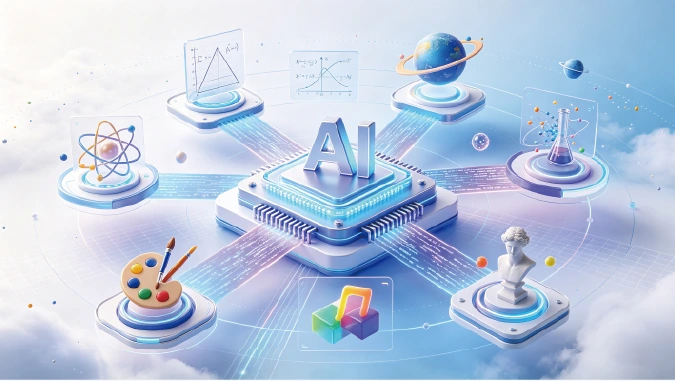
Interdisciplinary integration
Beyond the traditional computer science class, AI is integrated with math, science and the arts to build a well-rounded framework of understanding.
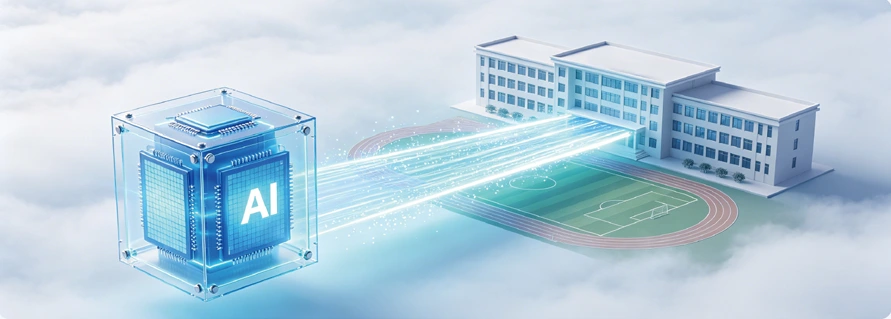
The program brings schools an AI education solution that needs no infrastructure investment, puts pedagogy first and covers everything end to end, from grade 1 to grade 12. With two platforms for teaching and practice plus a set of standardized materials, it supports the whole flow from lesson planning to classroom teaching and practice.
Aligned with UNESCO's AI competency framework, the program covers all 12 years of school. No new hardware is needed: schools run it in their existing computer labs and equip students with future-ready AI competencies.
Each grade has 16 periods, split evenly across 2 semesters. Schools can start in the 2026–2027 school year using their existing computer labs.
Beyond the traditional computer science class, AI is integrated with math, science and the arts to build a well-rounded framework of understanding.
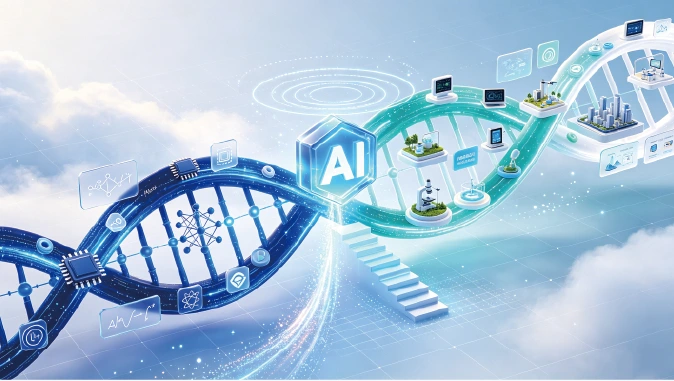
Strand A focuses on core technical principles, strand B on real-world applications. Theory and practice intertwine so that knowledge and skills grow together.
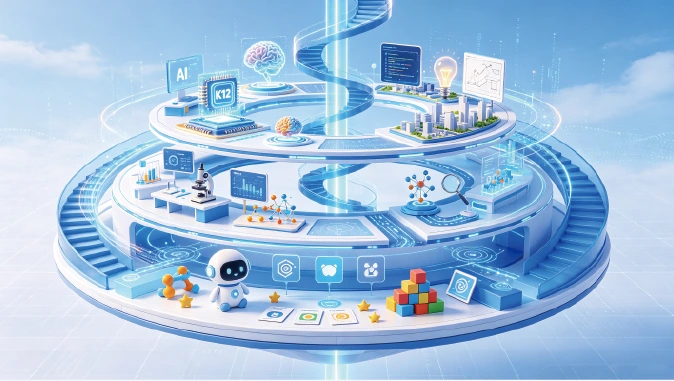
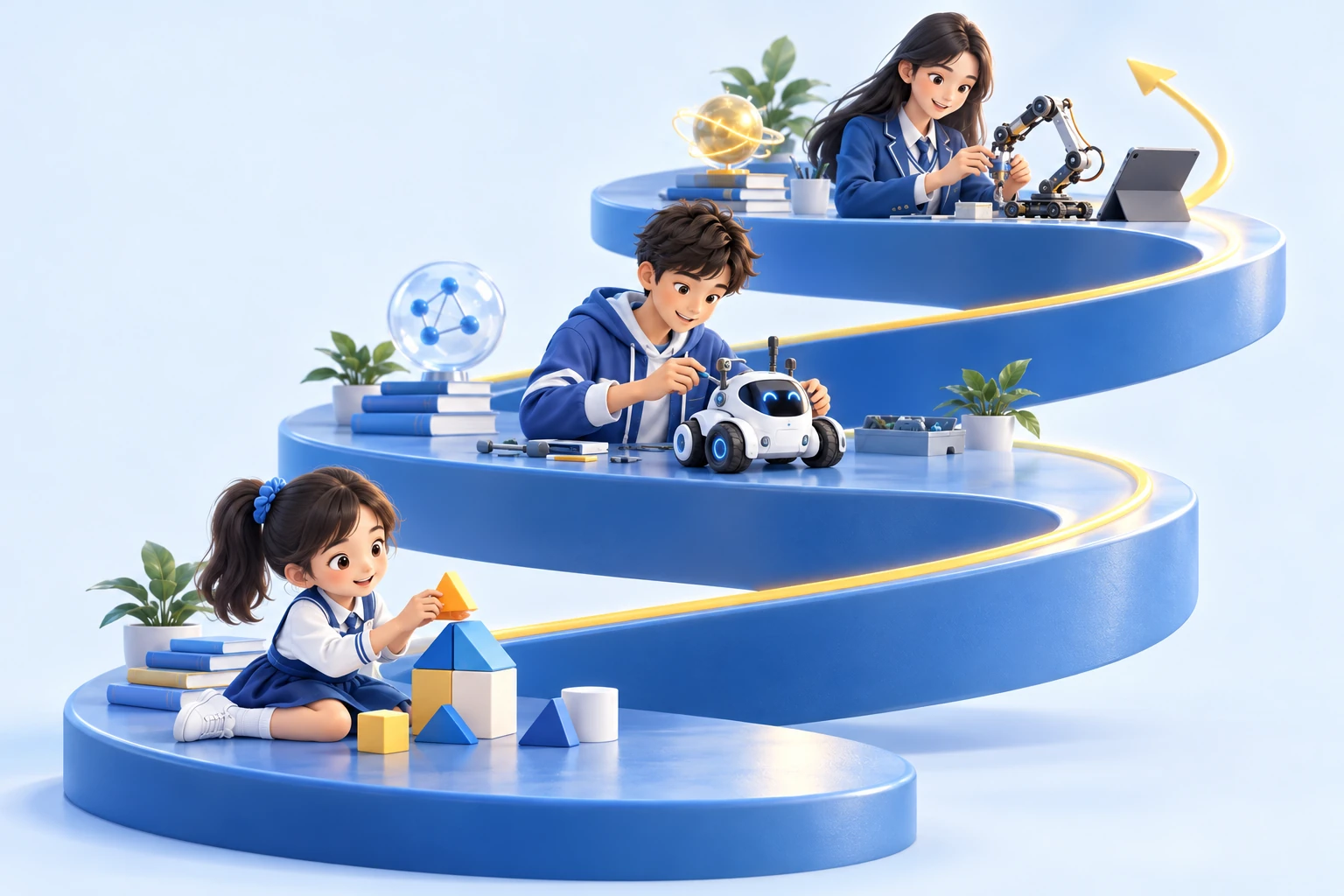
Core concepts deepen level by level: Awareness in primary school, Exploration in lower secondary, Creation in upper secondary, forming one continuous path from grade 1 to grade 12.
16 periods per grade, split evenly across 2 semesters: 192 periods in all from grade 1 to grade 12. Below are sample lessons for each grade.
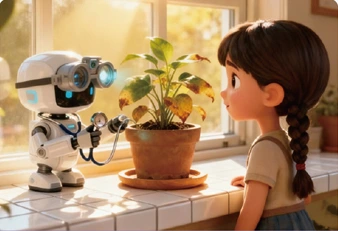
Through concrete experiences, students get to know AI intuitively and with all their senses. This approach sparks curiosity and nurtures early abstract thinking.
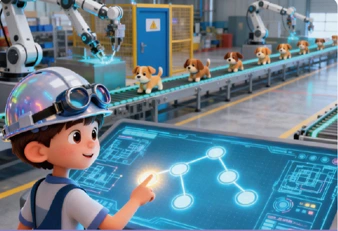
Students explore the principles and logic inside AI, meet AI agents and use AI tools to solve real problems, building computational thinking step by step.
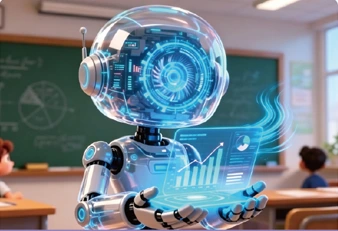
Students go deeper into neural networks, multimodal AI and application development, building their own AI products to solve complex problems creatively and responsibly.
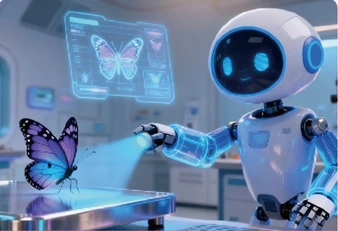

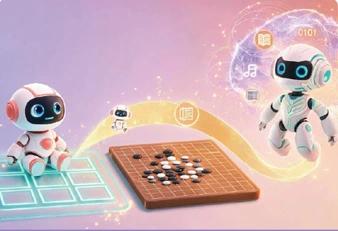
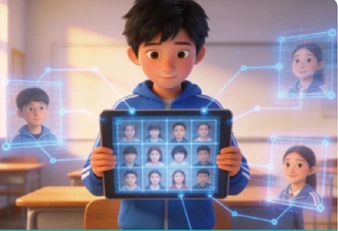
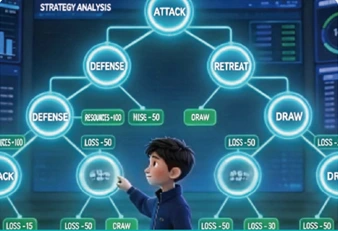
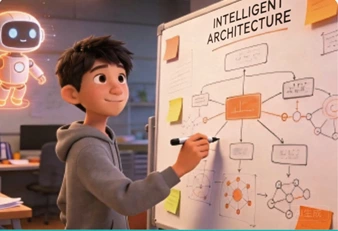
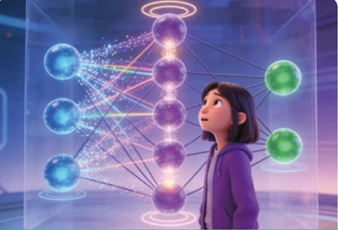
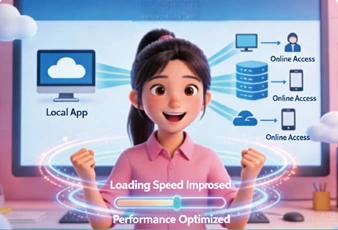
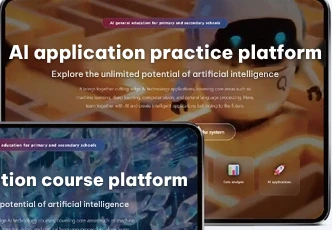
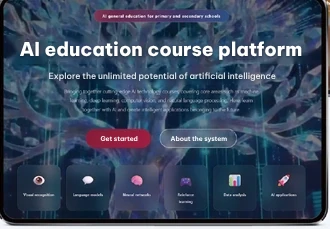
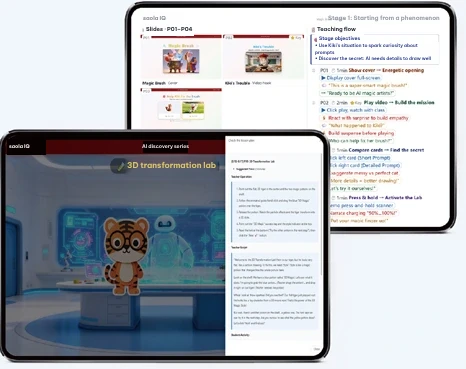
Powered by standardized interactive materials, the platforms connect lesson planning, classroom teaching and self-study, so schools can deliver quality AI lessons at scale.
Every topic comes with a ready-to-use set of standardized materials. Teachers need no deep AI background or long preparation, and teaching quality stays consistent at scale.
Two deployment models to fit different organizational structures.
For individual schools: a fast rollout of the standardized AI education program.
For Departments and Bureaus of Education and Training and school groups: centralized oversight and administration.

The gateway to experiential learning and AI practice, with cloud storage for personal learning records.
The hub for lesson planning and teaching, with AI analysis and automatic grading.
Centralized account provisioning and management, with a dashboard tracking students' progress and results.
A cross-school data center for allocating resources and evaluating teaching quality across the region.
No lab upgrades needed. Access through a standard web browser, with no extra hardware investment.
Not tied to a single site: scale smoothly from one school to a whole region with flexible account provisioning.

On-premises deployment is supported. Systems and data are hosted 100% in Vietnam, in compliance with the Law on Personal Data Protection No. 91/2025/QH15, keeping the school's data safe, private and under its control.